
Introduction
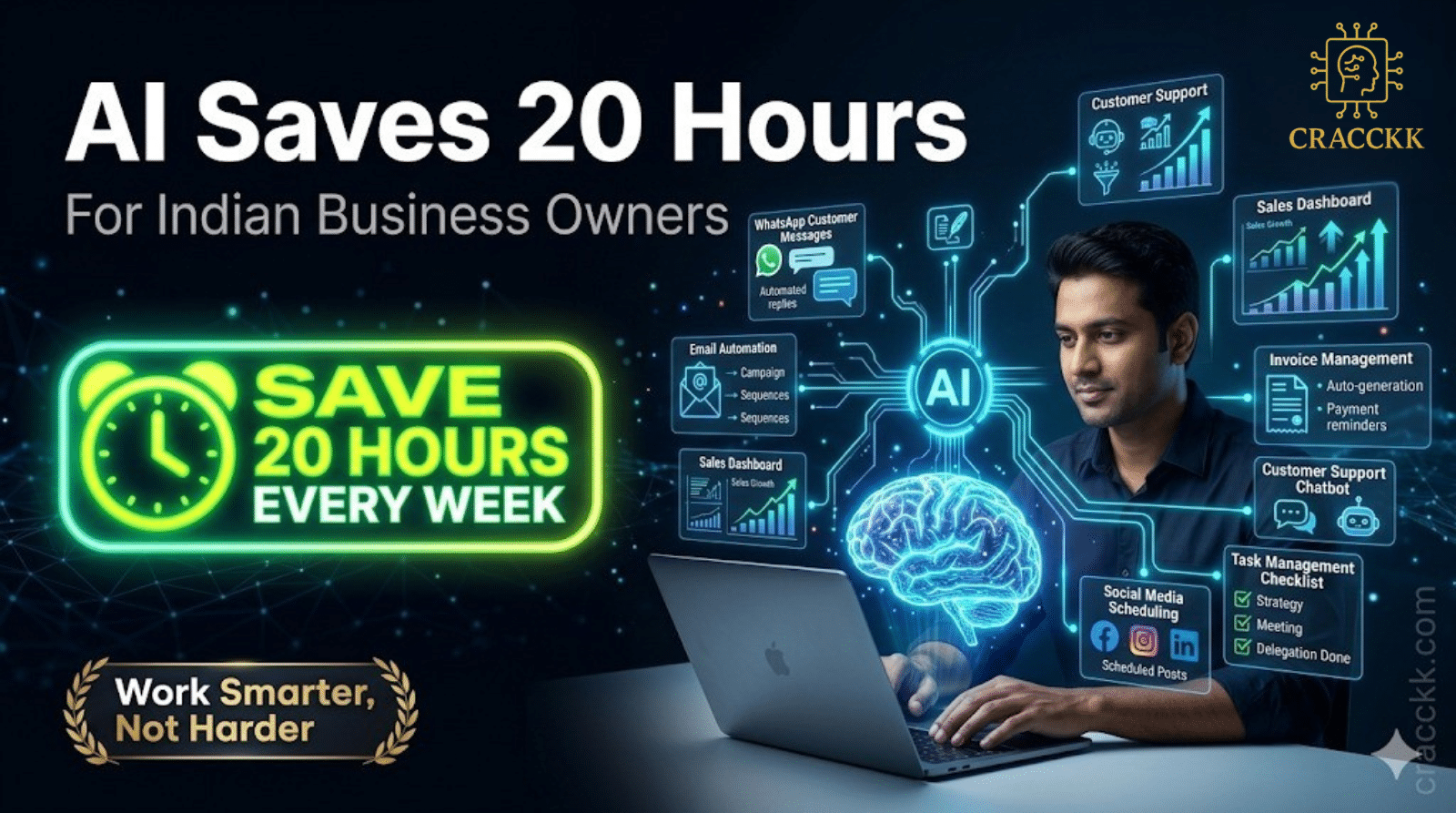
Artificial intelligence is no longer a technology reserved for large corporations. Across India, business owners are already using it every day, from chatbots that answer customer queries on WhatsApp to software that writes marketing copy, screens job applications, and flags unusual transactions. For many small and mid-sized companies, these tools save hours of work and open doors that were once too expensive to approach.
That convenience, however, comes with responsibility. An AI tool can only be as fair, accurate, and respectful as the way it is set up and supervised. A chatbot may give a customer wrong information, a hiring tool may quietly favour certain candidates, and a careless upload may expose private data. These problems rarely announce themselves, which is why good intentions alone are not enough. To use AI ethically, you need clear rules, honest communication with customers and staff, and regular checks on how your tools behave.
Ethical AI is also not just about avoiding trouble. Customers, employees, and partners increasingly prefer to work with companies they trust. Handling AI responsibly can protect your reputation, reduce legal and financial risk, and improve the quality of your decisions. With India’s data protection rules developing quickly, businesses that build good habits now will be better prepared than those who wait.
This guide explains, in simple terms, how Indian business owners can do exactly that. You will find the core principles to follow, real workplace examples, questions to ask before buying a tool, a practical 30-day starter plan, and answers to common questions. You do not need a technical background or a large budget to begin.
Why Ethics Matter for Indian Businesses
India’s market is diverse, with many languages, communities, and income levels. A tool trained mostly on foreign data may misjudge Indian names, accents, or spending habits. When such mistakes affect loans, hiring, or customer service, real people are harmed, and trust is lost quickly. Small businesses are not exempt, because a single viral complaint can travel far.
The legal picture is also changing. The Digital Personal Data Protection Act places duties on companies that handle personal information, and regulators are paying closer attention to automated decisions. The cost of careless use is real: chatbots have given harmful advice, hiring tools have shown bias, and data leaks can bring penalties and legal fees. Customers leave, staff lose confidence, and repairing trust takes far longer than building it carefully. Owners who use AI ethically protect their profits as well as their principles.
The Core Principles to Follow
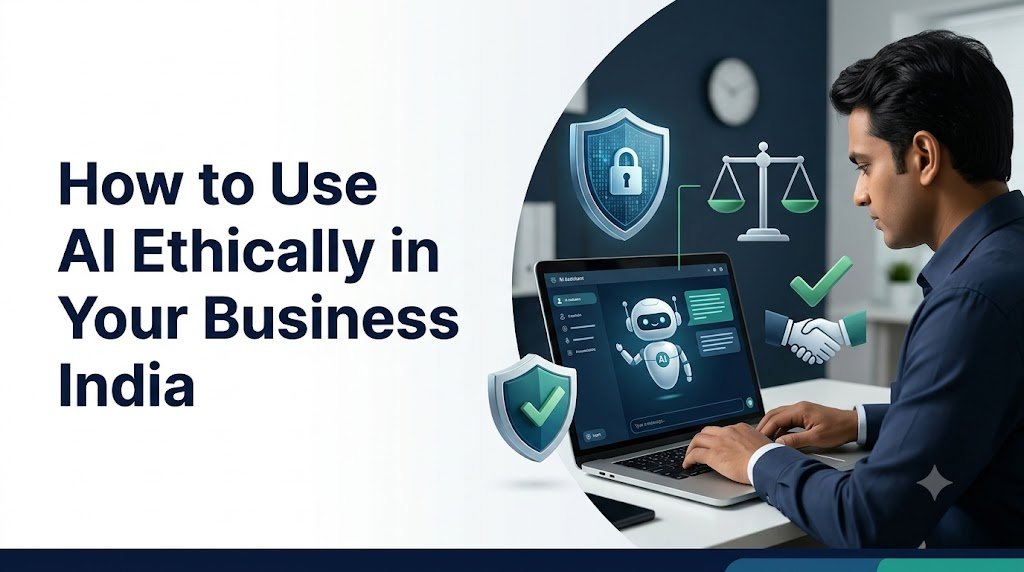
Most ethical frameworks come down to five ideas: fairness, transparency, privacy, accountability, and human oversight. You do not need a large legal team to apply them. You need a habit of asking, before every new tool, who could be affected and how.
Transparency is the easiest principle to start with. Tell customers which parts of your service involve automation, explain in plain words how their information is handled, and publish a contact for questions. A few clear sentences on your website or invoice are enough.
Real Examples From Indian Workplaces
Consider a small clothing store in Jaipur that uses an AI tool to write product descriptions and answer WhatsApp queries. The owner reviews every description, tells customers when a bot is replying, and keeps order details private. Customers notice this honesty, and it can bring repeat orders without hiring an expert.
Now compare a lender that uses software to approve loans but never checks how it treats applicants from smaller towns. Deserving customers are rejected without explanation, complaints pile up, and the brand suffers. The technology was the same; the difference was care, testing, and accountability.
Hiring shows the same pattern. Rohit, who runs a logistics firm, tried an AI tool to score driver applications. When he tested the results, he found that candidates from certain areas were ranked lower for no good reason. He paused the tool, asked the vendor to fix it, and added a human review. The extra step took a week and saved him from a serious reputation problem.
Questions to Ask Before You Buy Any AI Tool
Before you sign up, take ten minutes to ask some honest questions. What data does it collect, and where is it stored? Can it explain how it reached a result? Who is responsible if it makes a harmful mistake? Can you delete your data on request? Was it tested on Indian languages such as Hindi, Tamil, Marathi, or mixed Hinglish? A tool that misunderstands your customers can quietly treat them unfairly.
Do not assume that a reputable vendor means a safe tool. Ask where its data comes from and how it handles privacy. If you cannot get clear answers, look elsewhere.
Steps to Put Ethics Into Practice
- Be open with customers. Tell people when they are talking to a bot or when software assisted a decision.
- Protect personal data. Collect only what you need, get clear consent, and never paste confidential details into public tools.
- Check for bias. Test your tools on different groups, such as men and women, urban and rural customers, and speakers of different languages. Fix unfair results or stop using the tool.
- Keep a human in charge. Never let software make final decisions about hiring, firing, credit, or health without a person reviewing the result.
- Write a short policy. One or two pages is enough: which tools are allowed, what data they may touch, and who to contact with concerns.
Ethical AI in Marketing, Support, HR, and Finance
Marketing: Avoid fake reviews, invented testimonials, and misleading claims. Label AI-generated images or videos, check every fact, and never copy another creator’s work.
Customer support: Customers often write in when they are worried or frustrated. Offer an easy route to a human, keep chat records secure, and train the bot to admit when it does not know an answer.
Hiring and HR: Do not rely on a single score. Check outcomes across gender, region, and background, have a person read a sample of rejected applications, and tell applicants when software is involved.
Finance: Limit access to sensitive data, keep audit trails, and review automated decisions about credit or payments. Explain decisions in simple language when asked. Accuracy and fairness must come before speed.
Building an Ethical Culture and Tracking Progress
Rules only work when people believe in them. Train your team, give examples, and reward employees who raise concerns. Leaders set the tone: if the owner pauses a project to fix a privacy gap, the message is clear and lasting.
Involve your staff early. Explain which tasks will be automated, which will not, and what support is available for learning new skills. Hiding AI use creates fear and rumours. Be careful with monitoring too: if you track anything, say so openly, explain why, and limit it to what the job requires. Also guard against the most common mistake, which is copying AI output without checking it, since tools can invent facts and repeat stereotypes.
Track a few simple signs of progress each quarter: complaints about automated replies, the share of decisions reviewed by a human, ethics training completed, and how quickly reported problems are fixed. If the numbers move the wrong way, slow down and look closer. Keep a short record of problems found and how you solved them, and update your policy as technology changes.
A Simple 30-Day Starter Plan
In week one, list every AI tool your business uses, including free ones employees adopted on their own. In week two, review the data each tool can see and remove anything sensitive. In week three, test your most important tool on a range of customers and note any unfair results. In week four, write your one-page policy, share it with the team, and schedule your first review for three months later.
Progress matters more than perfection. A modest plan that people follow beats an impressive document nobody reads.
Frequently Asked Questions
Do small businesses really need an AI policy? Yes. A short policy protects you, your staff, and your customers, no matter how small the company is.
Is it ethical to use AI for writing? It can be, if you check facts, avoid copying, and are honest about how the content was produced. That is how most owners use AI ethically for content.
What if my vendor will not share details? Treat it as a warning and look for a more open supplier.
Who is responsible when AI makes a mistake? The business that deployed it. You cannot hand responsibility to software.
Does the Digital Personal Data Protection Act apply to my business? It can, even for small firms, if you handle the personal data of people in India. Collect only what you need, get clear consent, store it safely, and delete it when it is no longer required. For specific legal questions, speak to a qualified lawyer.
Is it safe to paste customer details into free AI tools? No. Public tools may store or reuse what you type, so never enter names, phone numbers, financial details, or other confidential information. Remove identifying details first, or choose a business-grade tool with clear data terms.
How often should I review the AI tools my business uses? At least every three months. Tools, laws, and your own use of them change quickly, so check for bias, privacy gaps, and complaints regularly, and keep a simple record of what you found and fixed.
The Bottom Line
You do not have to choose between growth and ethics. The businesses that thrive in India will be the ones that earn trust while adopting new tools. Start with honesty, protect data, test for bias, and keep people in charge. Those four habits cover most of what matters if you want to use AI ethically.
Nobody expects perfection. Customers, employees, and regulators mostly want to see honest effort and quick correction. If you make a mistake, admit it, fix it, and explain what you changed. That openness often separates a business that can use AI ethically from one that only claims to.
Published by Crackk.com
Crackk.com covers artificial intelligence, AI tools, automation, technology, and practical AI applications for businesses, helping founders and professionals understand how to use emerging technology effectively in real-world work.