
Jensen Huang resigned as Nvidia CEO on 11 November 2026, after 33 years leading the chip company he co-founded. CFO Colette Kress is now interim CEO. For India, the Jensen Huang Nvidia exit raises questions about GPU deals, AI startup funding and the IndiaAI Mission, though no Indian project has been cancelled.
Nvidia makes the GPUs that train and run almost every big AI model, including the ones behind ChatGPT, Gemini and many Indian AI startups. A sudden change at the top of such a company affects the whole AI industry, including India.
Key takeaways
- Jensen Huang resigned as Nvidia CEO on 11 November 2026, after 33 years leading the company he co-founded.
- CFO Colette Kress has been named interim CEO.
- For India, the main questions are GPU supply deals, AI startup funding and the IndiaAI Mission.
- No Indian project has been cancelled so far.
What happened at Nvidia?
On 11 November 2026, Nvidia’s board accepted Jensen Huang’s resignation as chief executive. CFO Colette Kress was named interim CEO, and board member Harvey C. Jones became the company’s first board chair. A permanent CEO has not been named.
The resignation followed weeks of reports about Huang’s close relationship with Alice Huang, an executive at Megaspeed, an Nvidia customer that US and Singapore authorities have been investigating over possible chip diversion to China. The New York Times reported that a US government memo described her as a spy for China. This allegation has not been confirmed by any official public finding.
On 8 November, Huang wrote to employees admitting he had been unfaithful to his wife. He said the board had started an independent investigation and that he would cooperate. The board has not published any findings yet.
Timeline of key events
- 29 October 2026: The New York Times reports on Huang’s relationship with Alice Huang. Nvidia calls the interactions “not unusual”.
- 5 November: Three US House committee chairs ask Huang for a closed-door briefing.
- 8 November: Huang’s letter to employees; the board begins an independent investigation.
- 9 November: Nvidia shares fall more than 5%. Huang pulls out of public speaking events.
- 11 November: The board accepts Huang’s resignation. Colette Kress becomes interim CEO.
- 12 November: Huang agrees to testify before the US Congress before 26 November.
How the market reacted
According to Analytics India Magazine, Nvidia shares fell 4.34% to $166.19 on 12 November and were about 32% below their 6 October record high. That fall wiped out roughly $1.86 trillion in market value.
Reports also say Nvidia’s big customer orders are locked in for the coming quarters, and its chip roadmap (Blackwell, then Vera Rubin, then Feynman) has not changed. So the short-term supply of GPUs is not expected to stop.
Why this matters for India’s AI plans
IndiaAI Mission and data centres
India’s AI compute push depends heavily on Nvidia chips. In February 2026, Yotta Data Services announced it would spend over $2 billion to deploy 20,736 Nvidia Blackwell Ultra GPUs, and commit more than 10,000 of them to the IndiaAI Mission. Tata Communications and Larsen & Toubro also work with Nvidia on AI infrastructure in India.
No Indian project has announced a delay because of the CEO change. But Huang personally built many of these relationships, so watch for any change in how fast new deals are signed.
Indian AI startups
TechCrunch reports that Nvidia invested in 105 startup funding rounds this year, according to PitchBook, and that Huang made most of the big investment decisions himself. Investors describe Kress as more conservative.
If Nvidia writes fewer or smaller cheques, AI startups worldwide, including Indian ones hoping for Nvidia backing, may find funding harder. Some investors expect Google, Amazon, Microsoft and AMD to try to fill the gap.
Developers and students
Nvidia’s CUDA software is still the standard for AI work, and that does not change with a new CEO. Learning CUDA and GPU basics remains useful.
At the same time, rivals are getting stronger. AMD reported Q3 2026 revenue of $13.4 billion, up 45% year on year, and Google says it has more than 100 significant TPU customers. Students who also learn AMD’s ROCm or Google’s TPU tools will have more options.
What it means for small businesses and creators
If you run a shop, clinic or agency and use ChatGPT, Gemini or Claude, nothing changes for you today. These tools are run by other companies, and none has announced price changes because of Nvidia’s leadership news.
In the longer run, more competition between Nvidia, AMD and Google chips could make AI computing cheaper. That could mean lower prices for AI tools, but this is not confirmed and will take time.
If you hold Nvidia shares through a US stocks app, note that the price has been volatile. Cracckk does not give investment advice; speak to a SEBI-registered adviser before making decisions.
Who could gain from Nvidia’s trouble
- AMD: has multi-year GPU deals with OpenAI, Meta and Anthropic, and its data centre revenue nearly doubled in Q3 2026.
- Google: sells its TPU chips through Google Cloud and now also as complete systems for customers’ own data centres. Oracle plans to offer TPUs from 2027.
- Custom chip makers: Counterpoint Research expects custom AI chips to ship in higher unit numbers than GPU accelerators next year.
Key terms explained simply
- GPU: a graphics processing unit. AI companies use thousands of GPUs to train and run models because they can do many calculations at once.
- CUDA: Nvidia’s software platform that lets developers program its GPUs. Most AI tools are built to run on it, which is a big reason Nvidia leads the market.
- TPU: Google’s own AI chip, a tensor processing unit, used for Gemini and now sold to other companies through Google Cloud.
- ROCm: AMD’s software platform for its AI chips, a competitor to CUDA.
- Interim CEO: a temporary chief executive who runs the company until the board picks a permanent one.
Understanding these terms makes it easier to follow AI chip news, which affects how much AI tools cost in the long run.
What we do not know yet
- Who will be Nvidia’s permanent CEO.
- The results of the board’s independent investigation.
- Whether the spy allegations reported by the media are true. They have not been officially confirmed.
- Whether Nvidia will change any India partnerships or investment plans.
Related guides on Cracckk
- Anthropic IPO explained – price, date and whether Indians can invest
- LangChain’s $3B valuation – what it means for Indian developers
- Best AI tools for MSMEs in India – practical picks for small firms
- Top AI agents for business – ready-made agents you can use today
Looking for ready-made prompts? Browse our free AI prompt library.
Start here for the full picture: our AI for Small Business in India guide.
FAQ
Who is the new CEO of Nvidia?
CFO Colette Kress is interim CEO. Nvidia has not named a permanent CEO yet.
Why did Jensen Huang resign?
He resigned after reports about his relationship with an executive at a company under investigation over chip diversion to China, and after he admitted personal misconduct in a letter to staff. The board’s investigation is ongoing, and the spy allegations are not confirmed.
Will GPU supply to India stop?
There is no sign of that. Reports say Nvidia’s big orders are locked in for the coming quarters, and no Indian project has announced a delay.
Will ChatGPT or Gemini become costlier because of this?
No such change has been announced. These services are run by OpenAI and Google, not Nvidia.
Sources
- TechCrunch: The Jensen Huang saga, a timeline
- TechCrunch: Huang’s departure and AI startup funding
- Analytics India Magazine: Huang’s exit and the AMD, Google opening
- Nvidia blog: India fuels its AI Mission with Nvidia
- CRN Asia: Yotta to deploy 20,736 Nvidia Blackwell Ultra GPUs
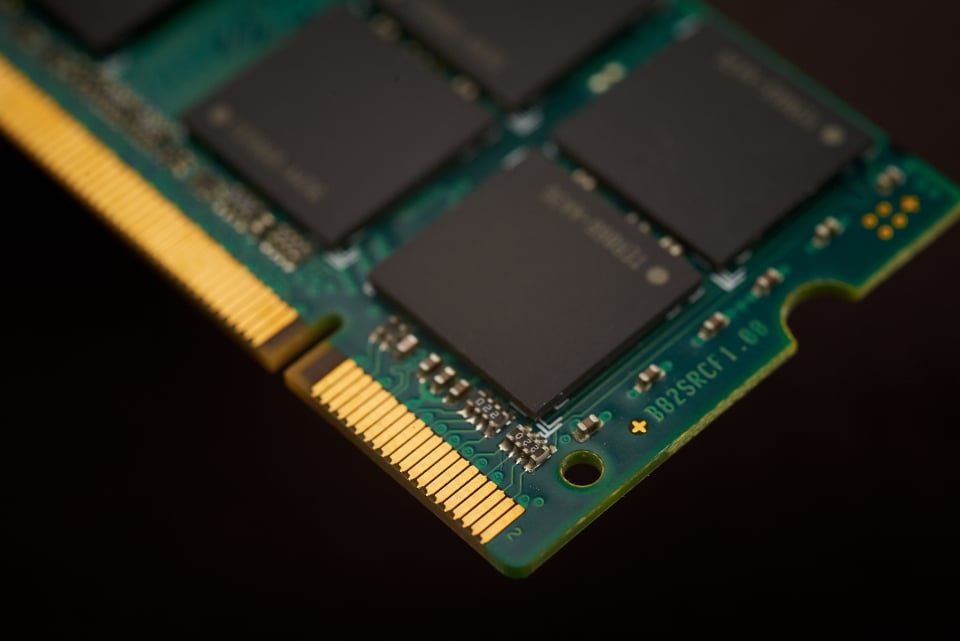
Featured image: Computer Chip by Lenharth Systems, CC CC0 (via Openverse)




1 comment